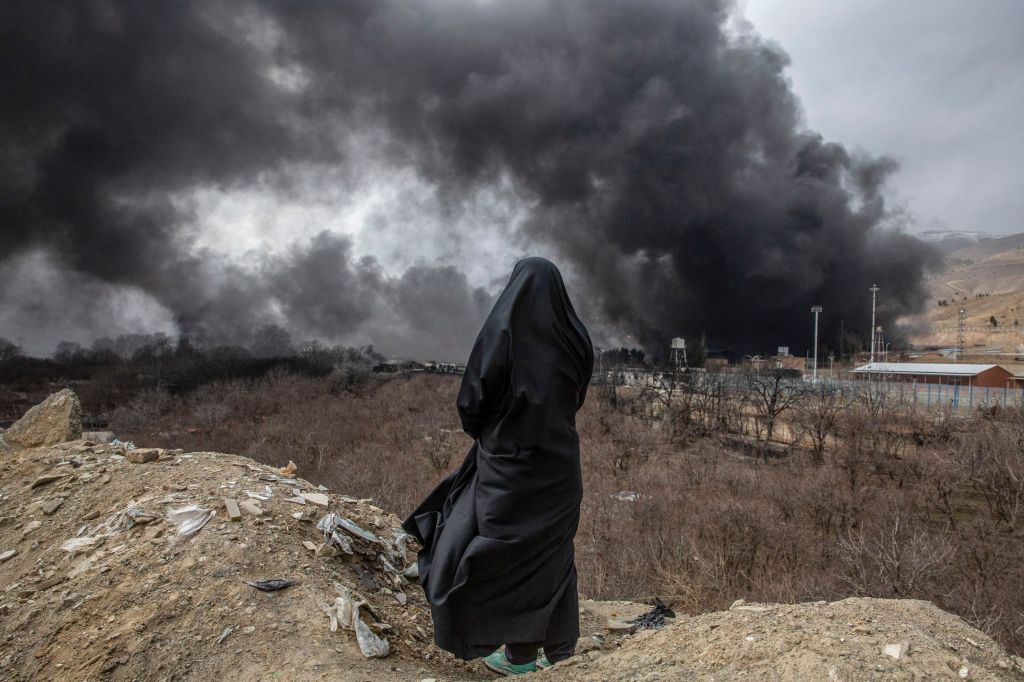
The U.S. has been actively engaged in military conflict with Iran for nearly 7 months now. It’s a complicated situation, with a lot of moving parts, and a deep history…but let’s catch you up by looking at the recent history impacting the conflict and the timeline.
#1. Iran’s Nuclear program is central to this conflict. The Joint Comprehensive Plan of Action (JCPOA) was a 2015 international agreement intended to limit Iran’s nuclear program in exchange for lifting economic sanctions.
This agreement, signed during the second Obama administration, essentially told Iran “you can build a civilian nuclear program to generate energy, but we get to keep tabs on it and be sure you aren’t violating the terms of this agreement and/or trying to make weapons. In exchange, we’ll lift economic sanctions on your country and allow you to rebuild your economy.”
The JCPOA was signed by the United States, The United Kingdom, France, Russia, China, Germany, the EU, and Iran.
#2. Iran was complying with the JCPOA.
There’s a neutral organization that is used to track all things nuclear called the International Atomic Energy Agency (IEAE.) Their reports happened quarterly on Iran, and all reports found that Iran was complying with the terms in the JCPOA.
#3. The Trump Administration certifies in April and July 2017 that Iran is abiding by the JCPOA.
Then, in October, they refused to make the certification saying that the suspension of sanctions was not “proportionate and appropriate.” Trump made comments on the JCPOA during his 2016 presidential campaign, often saying it was a terrible deal, wanted to negotiate, etc. Trump believed that the sanctions lifted were too great and not proportional, and that Iran was getting the better deal. This is the beginning of that campaign promise coming to fruition.
#4. In 2018, the Trump Administration withdraws the U.S. from the JCPOA and reinstituted economic sanctions in Iran.
This does two things:
- Puts pressure on Iran economically making it more difficult for them to trade and,
- De-fangs the JCPOA and completely removes any incentive for Iran to abide by the JCPOA.
Trump was likely hoping to force Iran back to the negotiation table for stricter terms, but the opposite happens, and instead we have nearly 6 years of “maximum pressure” sanctions on the Iranian economy that continue through the end of Trump’s first term, all through Biden’s term, and into Trump’s second term.
#5. Iran, feeling immense economic pressure (and seeing no way to negotiate out) and no longer bound by the JCPOA after the U.S. has withdrawn, starts to build its nuclear program towards weapons capability, in the hope that nuclear power forces countries to negotiate with Iran and swings the pendulum immensely in their favor in the region.
In 2019, the IAEA noted several breaches of the JCPOA, namely exceeding limits on enriched uranium stockpiles and centrifuge numbers. In 2021, Iran completely stopped implementing its voluntary nuclear-related commitments, severely limiting the IAEA’s verification capabilities.
#6. In 2025, the United Nations activates the “snapback” mechanism written into the JCPOA to reimpose the same sanctions that were on Iran prior to the JCPOA in 2015 and earlier.
This is done in response to Iran breaching the JCPOA, stating that since 2019 Iran had “increasingly and deliberately ceased performing its JCPOA commitments”, including “the accumulation of a highly enriched uranium stockpile which lacks any credible civilian justification and is unprecedented for a state without a nuclear weapons program.” Here is where we see the first real evidence that Iran is moving rapidly towards a weapons program.
SO – Now we know the background. We had a deal with Iran that was keeping them nuclear compliant that was backed by the major powers of the world, including China. We had confirmation that Iran was in compliance with the deal. Then, the U.S., under President Trump, withdraws from that deal. Iran no longer has any incentive to abide by those rules, and starts building towards weapons capacity in a race for power.
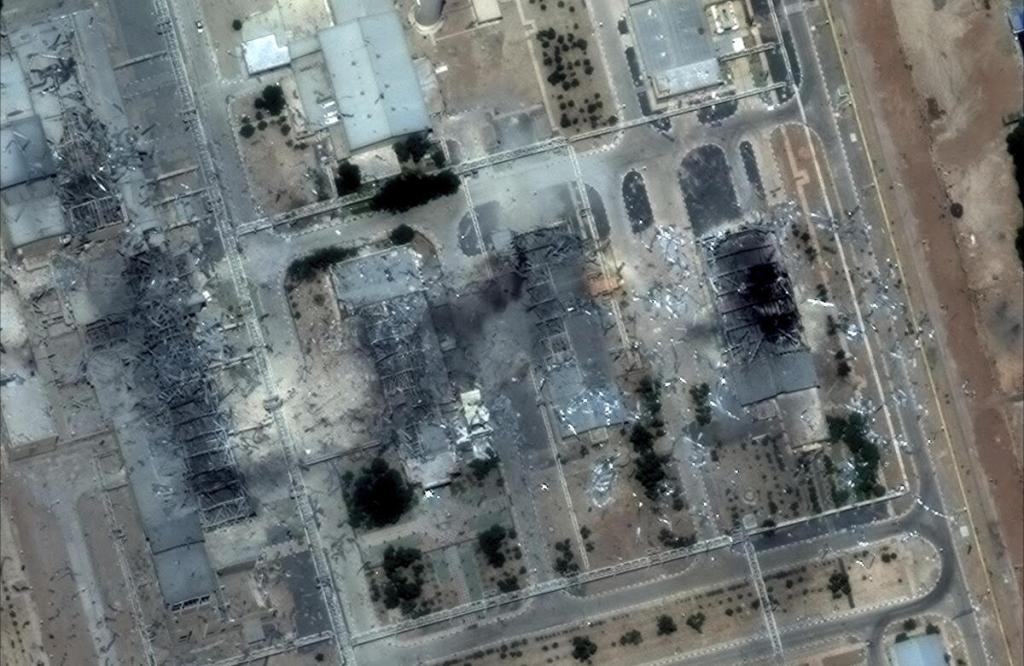
#7. Israel lobbies President Trump hard to conduct joint strikes on Iran, citing Iran’s growing nuclear capability, and President Trump eventually agrees. On February 28, 2026, the U.S. conducted a massive joint strike with Israel on Iranian nuclear locations, military targets, and Iranian leadership, including the assassination of Supreme Leader Khamenei, the religious and political leader of Iran. For 7 months now, The two sides have exchanged blows, with Iran striking military bases in the region, and the U.S. continuing to bomb and fire missiles at Iran. Iran activates its “mosaic defense strategy”, giving its military a de-centralized command structure with built in redundancies, essentially forming pockets of independent military provinces all throughout the country. This gives the local commanders freedom to act independently in the pursuit of a pre-defined strategy and objectives – also making it difficult to reach any true ceasefire since there is no top-down structure that holds authority.
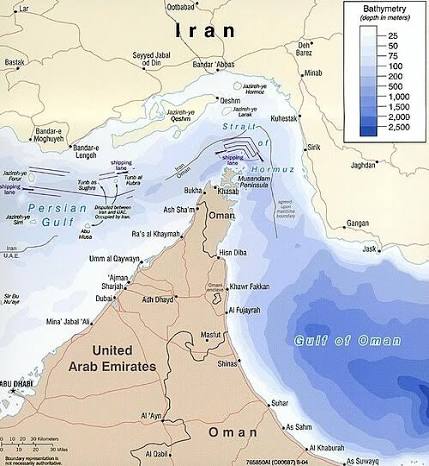
#8. The Strait of Hormuz is immediately blocked by Iran following the attacks, forbidding passage through the straight, boarding and attacking merchant ships, and laying mines in the Strait. The Strait of Hormuz is a waterway that sits between Iran and Oman that, at its widest, is only 32 miles wide. Nearly 25% of the world’s oil has to pass through this strait after being drilled from Gulf countries like Saudi Arabia, Oman, and Kuwait. It’s important to note that, prior to the attacks on Iran by the U.S., the Strait was considered free waters and traversal was not limited, taxed, or tolled in any way. This begins the biggest economic impact from the war – a stranglehold on a large amount of the world’s oil supply. Suddenly, 25% of the world’s oil is unable to leave the Gulf and sits idly on ships with no way out. The blockade remains in effect today, though there have been some small breaks due to brief ceasefires over the 7 months. The U.S. also is enacting its own blockade of Iran in the Gulf, but oil trade is still restricted severely by the war in Iran and the blocking of the Strait of Hormuz. As recently as September 13, a tanker was attacked in the Strait.
Give It To Me Straight
Here we are. We’re embroiled in a conflict of our own making that severely impacts the globe’s energy supply, threatens stability in the entire Middle East, and has no clear end in sight. And that, really, is the biggest indictment of this conflict. From the beginning, the Trump Administration has had seemingly no plan for how to deal with Iran. When the Trump Administration made the decision to withdraw from the JCPOA in 2018, they did so without any clear strategy for what happens next, setting off a chain of events that led us to the conflict today.
Trump’s favored strong-arm diplomacy failed to bring Iran to the negotiating table, and instead pushed Iran towards weapons-grade nuclear enrichment. One could argue that Iran would’ve gone that way itself eventually, and that is a valid argument, though the evidence suggests Iran was abiding by the enrichment rules of the JCPOA. The Trump Administration had Iran in an agreement with visibility on their nuclear program AND compliance from Iran, and threw it in the trash without any clear replacement.
From Iran’s perspective, why would they enter into an agreement with the U.S. again – knowing they could just decide to terminate the agreement and re-institute sanctions?
This is the problem the Biden administration ran into.
Though the Biden Administration wanted to re-enter into a JCPOA-like agreement, Iran refused to renegotiate until the sanctions were lifted and they had some kind of guarantee that a future U.S. president wouldn’t pull out of the deal again (a trend we are seeing from countries all around the world when negotiating with the U.S. now), something the Biden Administration couldn’t do politically without Congress formalizing the agreement. Iran had also moved to a more hardline government after the 2021 election of Ebrahim Raisi, making a formal agreement essentially impossible.
We are left with an increasingly escalating conflict with no clear end in sight. Iran has the ability to continue fighting for quite some time, and their demands remain complex, the drain on U.S. resources continue, with the war costing an estimated $113 billion thus far, and the global energy market in extreme volatility. President Trump will not want to acquiesce to any Iranian demands to save face, and is likely to escalate things further if the Republicans win the midterms in November.
The Politics of It All
Let’s wrap it up by looking at where the major political parties stand on the issue of Iran.
Democrats
Republicans
- U.S. was wrong to withdraw from the JCPOA, which was working as intended, especially without a clear plan in place for the aftermath.
- Conflict with Iran is a direct result from that withdrawal, which incentivized Iran to strive for nuclear weapons instead of negotiating with western powers.
- Trump Administration is taking irresponsible actions without any clear plan in place.
- U.S. should not be drawn into conflicts by Israel, and should focus more on U.S. interests than Israeli interests.
- Preventing a nuclear-armed Iran is vitally important to U.S. interests.
- Favors diplomacy and economic sanctions to prevent Iran from achieving nuclear weapons.
- The U.S. should never have entered into the JCPOA with Iran in the first place, as it did not restrict Iran’s ability to develop nuclear weapons sufficiently enough.
- Iran is a direct enemy of the United States, cannot be trusted, and should not be negotiated with or entered into a deal with unless the terms are extremely favorable to the U.S.
- Preventing a nuclear-armed Iran is vitally important to U.S. interests.
- Israel is a close ally of the U.S., and should be defended by extreme measures in the region.
- Favors military intervention and economic sanctions to prevent Iran from achieving nuclear weapons.


Leave a comment